What Is A Credit Score?
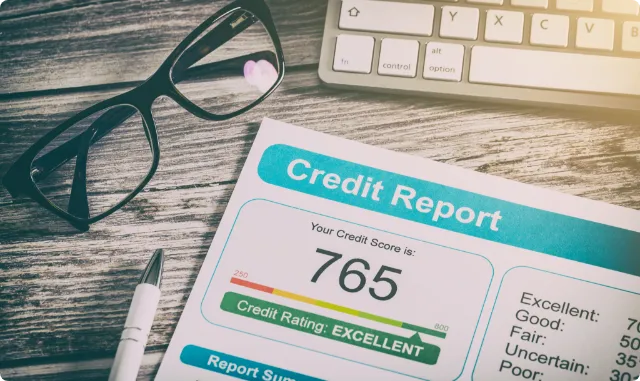
A Credit Score is a three-digit number representing a borrower's credit behavior — that is, a history of how well you manage your credit products and how likely you are to clear your debts. This includes the history of personal, education, home, business, or auto loans, as well as credit cards. Every lender, whether a bank, NBFC institution, or credit card company, refers to this score to verify the risk of lending money or extending credit to an individual.
Accredited agencies in India compile credit reports, which lenders then use to calculate the credit score of an individual. The primary credit bureau in the country is Experian, which collects and maintains individuals' information from various sources like banks, financial institutions, and other lenders. Thus, credit score is also often called an Experian score. One can quickly check their Experian report online by submitting basic financial details like mobile and PAN card numbers.

How Credit Score is Calculated?
Experian score ranges between 300 and 850. A higher score means a stronger credit profile and creditworthiness. Lenders perceive individuals with higher credit scores to have a lower default risk.
Factors like payment history, credit length, credit utilization, credit mix, and recent credit inquiries are considered when calculating a credit or Experian score. These criteria are assigned specific weights, and their collective assessment determines an individual's creditworthiness.
You must maintain a positive payment record and responsible credit management for a good credit score.
Why You Must Maintain a Good Credit Score?
Credit Information Companies (CICs) provide Experian score reports to financial institutions. Thus, you must maintain a good credit score to acquire a bank loan or credit. You must regularly check your credit score, as a higher rating helps in:
Negotiating a lower interest rate on loans and credits
Getting your loan application approved and processed instantly
Applying for a new credit card without any hassle
Obtaining credit cards with attractive features, rewards, and benefits
Waiving off pre-payment charges and processing fees in some cases
Gaining greater financial flexibility and purchasing power
Securing desirable rental accommodations since it proves your financial responsibility and reliability
Waiving off or reducing security deposits in some instances
Positively impacting your employability in industries where employers review credit scores while hiring
Maintaining a good Experian score will build a solid financial profile and demonstrate responsible management, opening doors to better financial opportunities in the future.
Credit Score Range
Most lenders consider a score of 750 or above from Experian or any credit bureau a good credit score. Maintaining anything between 700 and 850 will simplify loan or credit card application approval. The credit scores from two agencies may vary — you can have an Experian score of 750 or above but below 700 in another agency's report. So, keep a tab on credit scores from multiple bureaus, and preferably check once every month. Similarly, different lenders have their own benchmark of a "good" credit score.
That said, the following ranges generally indicate creditworthiness:
800 – 850
These individuals will likely have easier access to loans and credit besides a high chance of access to lower interest rates and other terms.
740 – 799
This score also signifies a solid credit profile, encouraging lenders to consider these individuals reliable borrowers.
670 – 739
Individuals have access to credit but face slightly higher interest rates or stricter lending conditions than those with higher scores.
580 – 669
Consumers with scores in this range might be considered subprime borrowers, qualified exclusively for loans with interest rates higher than the best available.
300 – 579
These borrowers are perceived as having higher credit risk and may face challenges in getting credit or loans.
Reasons for A Low Credit Score
Various factors affect your credit score negatively. Some of these common mistakes may seem minor, but when they add up, they have a more significant impact. These are:
Repeated late or missed credit payments like EMIs and credit card bills
Defaulting on loans or credit card payments
Regular high credit utilization or maxing out on your credit card
Multiple or frequent hard inquiries on credit and loans
Too many open credit accounts
Short credit history
Closing the oldest credit account when you have a new one open
Negative remarks such as settlements or bankruptcies on Experian reports
Errors in the credit report with any agency
How You Can Improve Your Credit Score?
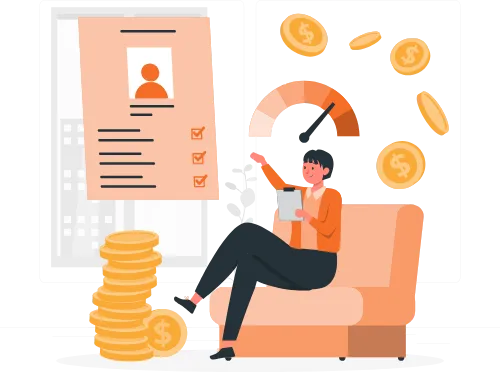
Even if your credit score slips for any reason, you needn't worry, as there are ways to improve it. If you ensure to do the following, your credit score will be healthy, and lenders will perceive you as a reliable borrower:
Don't miss or delay paying your credit accounts, that is, EMIs and credit card bills.
Don't depend on your credit card overly, and keep its balance low, preferably below 30%.
Maintain a healthy credit utilization ratio.
Avoid opening too many new accounts or applying for credit cards too frequently. If you must, wait for at least a few months between two applications.
Regularly check credit scores with different bureaus for errors and have them rectified as soon as possible.
Build a positive credit history over time by taking out a mix of secured loans, such as home and car loans, and unsecured loans, such as personal loans or credit cards.
Credit Score & Credit Report: How Are They Different?
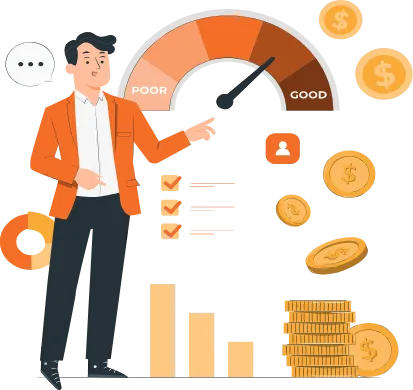
Credit scores and credit reports are distinct but interconnected. Credit reports provide the data used to determine your creditworthiness and produce the score. Thus, these are the starting points for computing the credit score that lenders can refer to.
| Credit Score / Experian Score | Credit Report / CIBIL Report |
|---|---|
| A numerical three-digit representation of creditworthiness (e.g., 300–900 in India) | Contains comprehensive information about credit accounts, payment history, credit inquiries, public records, etc. |
| Used to evaluate credit risk | Used to assess creditworthiness and make lending decisions |
| Generated by specific scoring models | Compiled and maintained by credit bureaus |
| Fluctuates based on recent credit activity | Reflects long-term credit behaviour and history |
| Frequently updated | Updated periodically by credit bureaus |
Experian Score's Impact on Loan and Credit Card Eligibility
Experian score is an essential factor that lenders consider while evaluating loan and credit card applications. Having a healthy credit or Experian score has many benefits.
Institutions will approve your credit more readily if you have a good Experian score.
A strong credit score makes lenders perceive you as someone with low credit risk.
You will enjoy more favorable loan terms and lower interest rates.
It enhances your eligibility for credit and provides access to better credit opportunities.
Improves overall borrowing capacity.
A low Experian score can result in loan rejection or limited credit card options.
Why You Must Check Free Credit Score on IIFL?
Regularly checking your CIBIL score will give you a detailed analysis of your credit behavior, and it does not affect your credit report or score. On IIFL's website, you can see what powers your CIBIL score, and our expert tips will help you improve it, too. Moreover, you can get exciting personalised loan offers based on your credit score.
Credit Score FAQs
While there is no fixed minimum score applicable universally, an Experian score of 670 or above is generally considered a good score and increases the likelihood of loan approval. Multiple financial websites offer an Experian check where you can easily get your free score.
By checking the Experian score, lenders can make informed lending decisions, manage risks, and ensure responsible lending practices. It allows them to evaluate the creditworthiness of borrowers and offer loans with appropriate terms and conditions.
Experian does not have the authority to delete or change credit information on its own. They can make changes to your credit report based on the investigation, but they rely on information provided by lenders and creditors. If the information is accurate and valid as per the lender's records, it may not be altered. However, if there are genuine errors, the credit bureau will correct them based on the investigation and the lender's response.
If you find errors on your credit report, you can contact Experian to report them. Experian has its own dispute resolution procedure, which may take some time as it involves coordination between the credit bureau, lenders, and creditors. You can expedite the resolution process by being proactive, providing accurate supporting documentation, and following up with the credit bureau.
Credit Score Related Videos




News and Blogs
 Gold Loan
A salaried person with little borrowing history may stop at one question before applying for ₹51,000. Does the lender need a credit score at all? The…
Gold LoanA first visit to a lender for a small loan can feel unfamiliar. The applicant may have no credit card, no past loan and no score. A ₹17,000 need, suc…
Gold LoanA first loan may be small, taken for a school fee or a medical bill. At that point, the borrower may have no credit card and no past loan. The credit…
Gold LoanMany applicants carry Aadhaar everywhere but are less sure about PAN. When a ₹77,000 loan is needed, the question is whether one can stand in for the…
Gold LoanSome borrowers do not have a PAN card yet. A small ₹38,000 need may arise before they get one. They then come across a form they may not have heard o…
Gold LoanAn applicant with only Aadhaar may plan a larger gold loan for a business or family need. At ₹6,90,000, the lender asks for more than identity proof.…
Gold LoanOnce a gold loan crosses ₹2.5 lakh, the paperwork grows. A borrower who took a small gold loan earlier may notice new questions about income. PAN als…
Gold LoanA household may plan to borrow ₹79,000 against family gold and expect the full amount. The figure offered can come out lower. The reason lies in how…